

You notice your shingles curling. Perhaps your roof began leaking this spring due to ice dams last winter. Maybe your roof is just starting to look weather-beaten from too many Minnesota freeze/thaw cycles. Now comes the dreaded homeowner’s decision: Do I need to replace my whole roof? Or is there a less expensive alternative?
That question tends to lead directly to the roof overlay vs. tear-off debate. Both options can be viable, depending on the specifics of your roof, but they’re not interchangeable, and choosing the wrong one could end up costing you more down the road. Here’s what Minnesota homeowners need to know before making the call.
Can You Put a New Roof Over Old Shingles?
The short answer is yes, sometimes. If certain conditions are met, installing a new layer of asphalt shingles over an existing layer is possible. This is known as a roof overlay, roof recover, or reroofing. It’s an acceptable roofing practice, however, it won’t be permitted in all circumstances.
Minnesota building code guidance says that generally two layers of asphalt shingles are the maximum before tear-off is required. Some municipalities, Elk River included, use that language right in their local permit office rules. So if your roof currently has one layer, you may be permitted to overlay, but local permit requirements and manufacturer instructions still matter and should be checked before making a final decision.
No matter how many layers your roof currently has, an overlay should never be performed if you have roof leaks, damaged decking, uneven shingles, or storm damage.
Roof Overlay vs. Tear-Off: What’s the Difference?
To make the right decision, it helps to understand exactly what each option involves.
What Is a Roof Overlay?
A roof overlay means installing new shingles directly over the existing layer without removing the old roof. The existing shingles stay in place, and new ones go on top.
Roof overlays are attractive because they’re significantly cheaper than tearing off the existing roof. There’s no tear-off labor, no debris removal or dumpster fees, and you end up with new shingles for a fraction of the price of a full replacement.
An asphalt shingle overlay can only be done with asphalt shingles if the existing roof is flat, the deck is intact, and your local code allows it. You can learn more about the process in this Summit Construction Group guide to roof overlays.
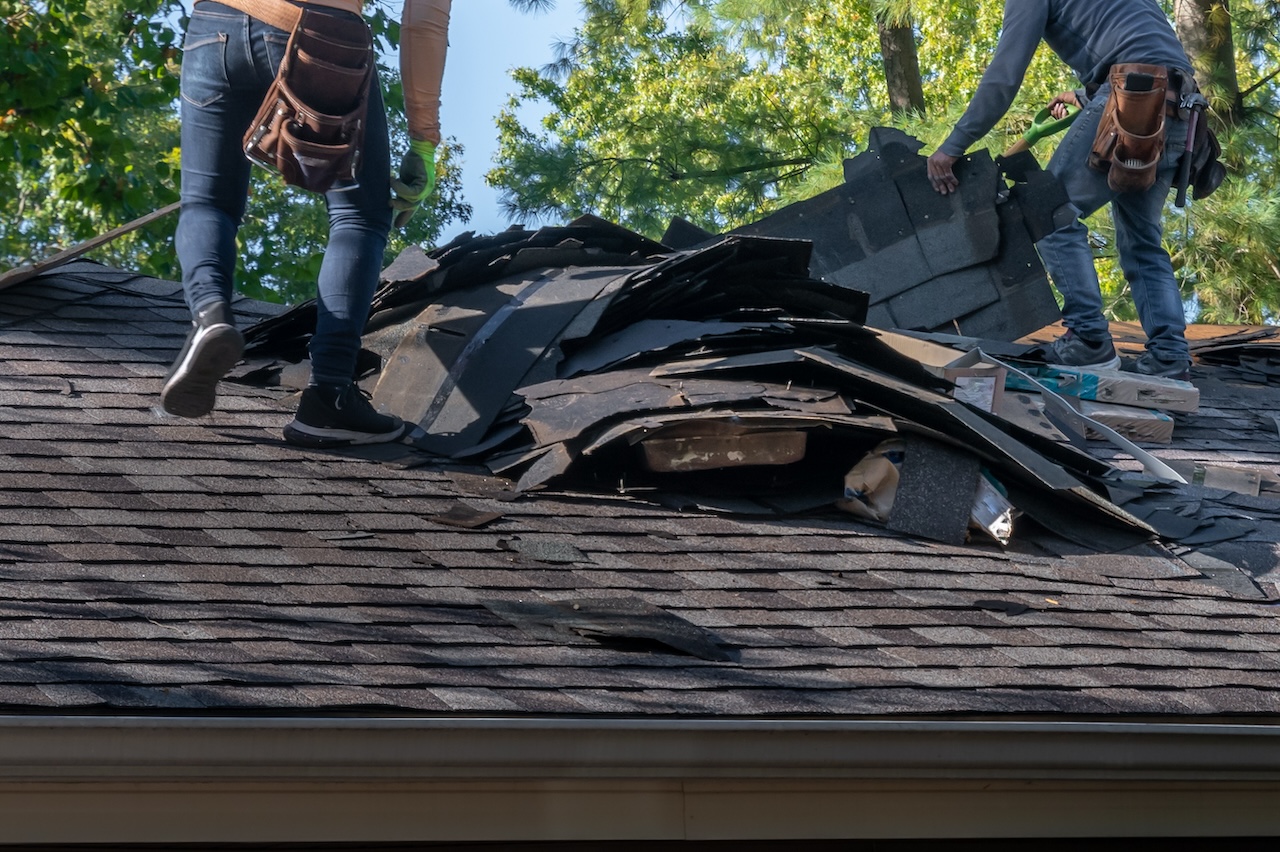
What Is a Roof Tear-Off?
A full tear-off means removing existing roofing materials down to the roof deck. When the deck is exposed, contractors can see it firsthand to make repairs. They can replace damaged areas, install new roof underlayment and ice and water shield, install roof flashing again, and construct an entire roofing system starting from the deck.
Quick Comparison: Roof Overlay vs. Tear-Off
| Factor | Roof Overlay | Full Tear-Off |
| Old shingles removed? | No | Yes |
| Upfront cost | Lower | Higher |
| Installation time | Faster | Longer |
| Deck inspection | Limited | Full inspection |
| Hidden damage found? | Usually no | Yes |
| Added roof weight | Yes | No |
| Long-term performance | Usually shorter | Usually better |
| Best for | Short-term budget situations | Long-term roof protection |
A tear off roof replacement is the more complete solution, and for most Minnesota homes, the one that makes sense long term.
When Is a Roof Overlay Allowed?
An overlay is acceptable in certain situations and should be avoided in others. Consider each of these factors before choosing one.
Your Roof Only Has One Existing Layer
In Minnesota, once your roof has two layers of shingles, you need to tear off the roof to meet code. Many Minnesota permitting offices defer directly to state guidance on this issue. You may not put a third layer down because it will exceed weight limitations.
The Existing Shingles Are Flat and in Decent Condition
Your existing roof must act as a flat and stable platform. Buckled, curled, cracked, missing, or uneven shingles will not allow new shingles to lay flat, and you’ll be left with an uneven finished surface and uneven structure beneath.
The Roof Deck Is Solid
An overlay completely conceals the roof deck. Any soft spots, sagging areas, rot, mold or moisture damage to the decking won’t be corrected by laying new shingles over top of them. The only way to be certain the deck is sound is with a tear-off.
There Are No Active Leaks
Installing new shingles over an existing leak doesn’t fix it – it just covers it up. If there’s any evidence of leaking, the old roof needs to come off first so the source can be found and addressed.
Local Code and Manufacturer Instructions Allow It
Most municipalities in Minnesota will require you to install roofing materials per state code and the manufacturer’s installation instructions. Some manufacturers of shingles will not warranty an installation if performed as an overlay. Be sure to check local permit requirements and product restrictions.
When Is a Roof Tear-Off Required?
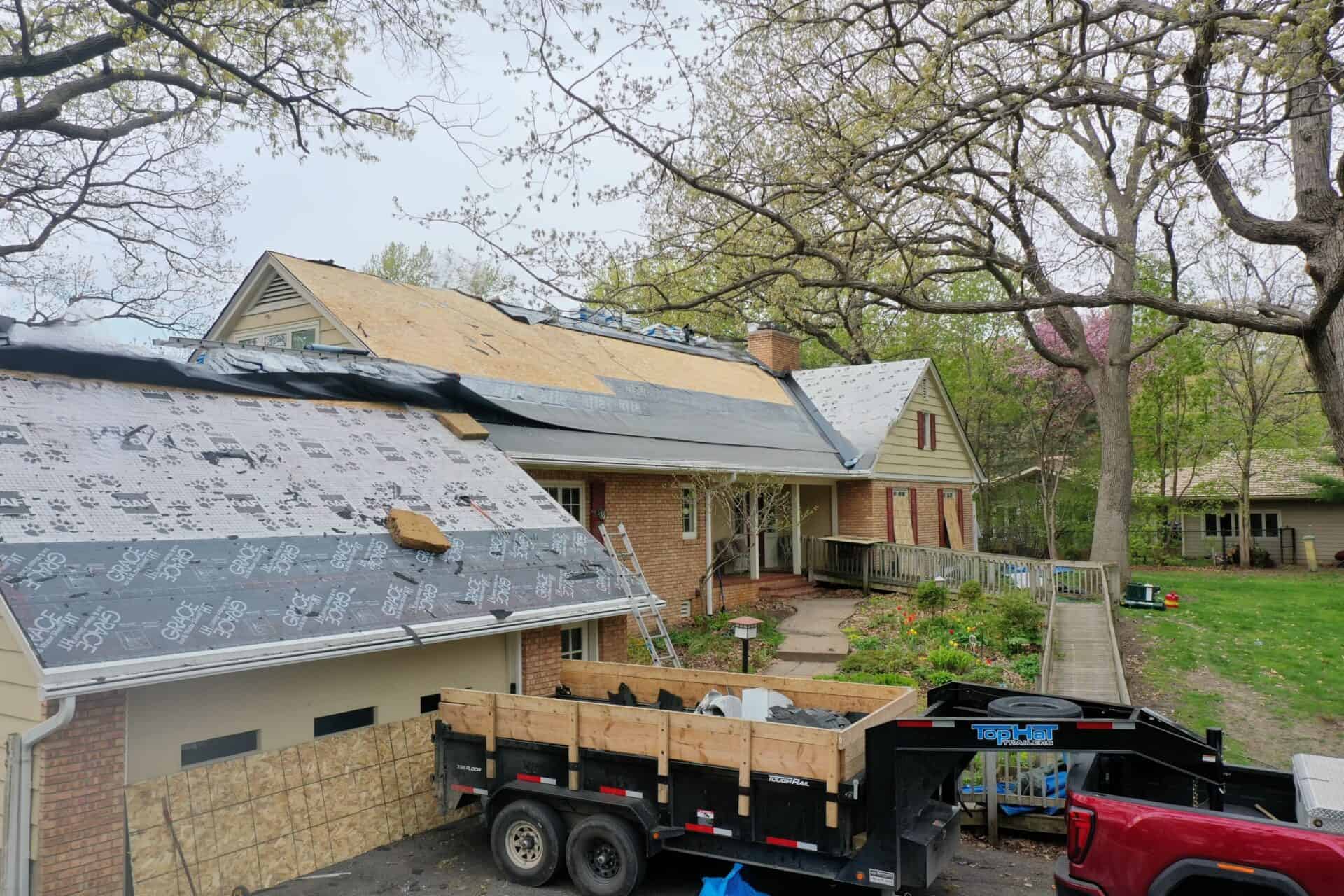
Your Roof Already Has Two Layers
A third layer of roofing material is too much weight for the roof structure and isn’t permitted under Minnesota regulations. If your home has been overlaid before, tear-off is the only option.
Your Roof Has Leaks, Rot, or Soft Decking
If there is active leaking or any suspicion of soft spots in the roof deck, tear-off is the only method to truly see what you’re working with. Putting an overlay down won’t fix the problem and it will only make future leaks more difficult to identify. Roof decking damage is one of the most common issues discovered during tear-offs and one of the most costly to ignore.
Your Shingles Are Curling, Buckling, or Uneven
If you install new shingles over a roof that isn’t perfectly flat, your new shingles will copy those irregularities. You’ll have an aesthetically unpleasant roof that is also disguising issues.
Your Roof Has Storm or Hail Damage
Minnesota weather can be unpredictable. If you experience hail damage, high winds, or ice dam damage, you should have your roof professionally assessed instead of overlaid. Storm damage roof replacement can have hidden deck issues that aren’t visible until the old shingles are removed.
You Want the Longest-Lasting Roof Possible
A tear-off returns your roof to new condition. Contractors tear off the old shingles and can replace underlayment, apply ice and water shield, and repair or replace flashing before installing new shingles. While they do this, every layer is inspected and installed to code. You just can’t get that kind of performance with an overlay.

Pros and Cons of a Roof Overlay
Pros of a Roof Overlay
- Lower upfront cost: Skipping tear-off labor and disposal brings the price down
- Faster installation: No removal work means a shorter project timeline
- Less debris: Fewer materials to haul away, and less disruption on the property
- May help in short-term scenarios: For homeowners who need to stabilize a roof within a tight budget, it can function as a bridge solution
Cons of a Roof Overlay
- Hides damaged roof deck: Rot, soft spots, and moisture damage go undetected
- Makes leaks harder to diagnose: Two shingle layers complicate future troubleshooting
- Adds weight to the roof structure: Weight is a concern compounded by Minnesota’s snow and ice seasons
- Shortens roof lifespan: New shingles only perform as well as what’s underneath allows
- Can lower resale value: Buyers and inspectors tend to view a full tear-off more favorably
- May void manufacturer warranties: Not all manufacturers will warrant overlay installations
- Costs more long-term: When the roof eventually needs replacing, you’ll pay to remove two layers instead of one, plus address whatever damage was hidden underneath
- Often results in an uneven finished appearance
Pros and Cons of a Full Roof Tear-Off
Pros of a Tear-Off
- Reveals hidden damage: Roof deck, underlayment, and framing can all be inspected directly
- Allows proper underlayment and ice/water shield installation: Every layer goes in correctly and to code
- Allows flashing replacement: Flashing around chimneys, vents, and valleys can be replaced rather than worked around
- Better long-term performance: A complete roofing system lasts longer and performs better
- Supports resale value and buyer confidence
- Makes future leak detection simpler
- Cleaner finished appearance
Cons of a Tear-Off
- Higher upfront cost: More labor, more time, and debris removal all need to be factored in
- Possible added cost if damaged decking is found
- Longer project timeline
It’s worth noting that addressing that damage during replacement is always better than discovering it through a leak later.
A tear-off costs more because it does more. Removing existing shingles allows contractors to inspect the deck, replace damaged areas, install new underlayment, add ice and water shield per Minnesota requirements, replace flashing, and then install the new roof system.
For context on what to expect to spend, our guide to roof replacement costs in Minnesota breaks it down.
Roof Overlay vs. Tear-Off Cost
Why Overlays Cost Less Upfront
Overlay eliminates tear-off labor. It also saves you dumpster rental and disposal costs. Those are legitimate savings, but they’re tied to what you aren’t getting, not what you’re purchasing.
Why Tear-Offs Cost More
Tear-offs require more labor because you’re paying for old shingles to be removed. The contractors will also be inspecting your deck and replacing it, if needed. Then they’ll install underlayment, add ice and water barrier to code specifications, replace flashing, and haul all of the debris away before they even start on your roof. Each step in that process is necessary for a reason.
| Roof Size | Overlay Estimate | Tear-Off Estimate |
| 1,500 sq. ft. | $6,000–$9,000+ | $9,000–$15,000+ |
| 2,000 sq. ft. | $8,000–$12,000+ | $12,000–$20,000+ |
| 2,500 sq. ft. | $10,000–$15,000+ | $15,000–$25,000+ |
| 3,000 sq. ft. | $12,000–$18,000+ | $18,000–$30,000+ |
Estimates vary based on roofing materials, decking condition, local labor rates, and permit fees. Contact Summit Construction Group for a project-specific quote.
The Hidden Cost of the Cheaper Option
But what if your overlay prematurely fails before you’re financially or logically ready to replace your roof? You now have to pay to remove two layers of shingles rather than one and fix whatever problem was lurking below from day one. Those small cost savings from the overlay is suddenly gone and you’ll spend more on the overlay than you would have on the tear-off.
Minnesota Roofing Considerations: Snow, Ice Dams, and Code
Added Weight Matters in Minnesota
Minnesota roofs are already supporting significant additional weight every winter. Piling on a second layer of shingles will increase the dead load your roof frame is engineered to support. If you have concerns about the framing in your roof, consult with a contractor prior to deciding on an overlay.
Ice and Water Barrier Requirements
Minnesota installs must include ice barrier protection on conditioned roofs. That’s any roof that connects to living space or an attic. The ice barrier should extend from the lowest roof edges, to 24” or more inside the exterior wall line. A tear-off allows this to be properly installed or replaced. An overlay generally doesn’t.
Ventilation and Heat Buildup
Extra shingle layers can trap attic heat in the summer and make ventilation issues harder to identify or fix. In Minnesota, attic heat and poor ventilation are two of the leading contributors to ice dam formation and accelerated shingle aging. These are problems worth addressing directly, not covering over.
Permits and Roof Inspections
Roofing work in Minnesota typically requires a permit, and many municipalities require inspections at the roof deck stage, the ice and water barrier stage, and the final installation.
Work with a licensed Minnesota roofing contractor to make sure your project meets Minnesota roofing code and that you have the proper inspection documentation in hand.
Is a Roof Overlay Ever the Right Choice?
An Overlay May Make Sense If…
- The roof has not been overlaid before
- Existing shingles are flat and undamaged
- There are no leaks or signs of water damage
- The roof deck appears solid
- A short-term budget solution is the priority
- Local code and manufacturer instructions allow it
A Tear-Off Is Usually Better If…
- The homeowner plans to stay in the home long term
- There’s storm or hail damage to address
- The roof is old or showing significant wear
- There are leaks or any evidence of moisture intrusion
- Resale value is a factor
- Full manufacturer warranty coverage matters
- The roof has already been overlaid once
For more on how different materials hold up against Minnesota winters, read our guide to the best roof types for Minnesota’s climate.
Questions to Ask Before Roofing Over Existing Shingles
How Many Layers Are Currently on My Roof?
This is the first question. If there are already two layers, an overlay is not permitted in Minnesota. A licensed roofing contractor can confirm the layer count during an inspection.
Is There Any Decking Damage?
An overlay limits what can be inspected underneath. If there’s any reason to suspect moisture damage or soft spots in the deck, tear-off is the only way to find out for certain.
Will the Manufacturer Warranty the Installation?
Not all shingle manufacturers will warrant an overlay job. If warranty coverage matters, verify what’s allowed before making the call.
Does My City Allow an Overlay?
Check with your local permit office. Minnesota municipalities can have requirements beyond state-level guidance, so the local office is the definitive source.
Am I Planning to Sell or Stay?
If you’re staying long term, a tear-off is almost always the better investment. If you’re selling soon and the roof meets overlay conditions, it may be a reasonable short-term option. Just note that buyers and their inspectors will want to know whether the roof was fully replaced or covered. Budget-minded homeowners often weigh this alongside the cheapest roofing material options available for their situation.
Final Verdict: Overlay or Tear-Off?
There are real pros and cons to both options. Is putting a new roof over an old one always a bad idea? No. But roof overlays cost less because they skip nearly every step required to do the job completely. That might be acceptable if you’re only thinking about next winter.
A shingle roof replacement done right starts at the deck, not at the surface.
For most Minnesota homeowners, though, a full tear-off is the smarter long-term investment. It gives you an actual new roof: deck inspected, underlayment replaced, flashing corrected, ice and water barrier properly installed, and new shingles on top. Roof overlay vs. tear-off ultimately comes down to whether you’re solving for next season or the next 20 to 30 years.
The Summit Construction Group team can inspect your roof’s current condition, confirm your layer count and deck stability, and give you an honest recommendation on whether an overlay or a full tear-off is the right call for your home.
FAQs
Can you put new roof shingles over old ones?
Yes, if your roof currently has one layer, the existing shingles are flat and in good condition, there’s no evidence of leaks or water damage, the roof deck is sound, and your local permit office allows overlays.
How many layers of shingles are allowed in Minnesota?
Most Minnesota municipalities allow a total of two layers of asphalt shingles before a tear-off is required. Local building departments can provide specifics, but most reference state guidance directly.
Is a roof overlay cheaper than a tear-off?
Yes, overlays cost less upfront because they skip tear-off labor and disposal. However, if you need to tear off the roof later, you’ll pay to remove two layers instead of one and address any damage that was hidden underneath.
Does a roof overlay last as long as a tear-off?
Usually no. An overlay prevents contractors from replacing damaged decking, installing fresh underlayment, or addressing ventilation issues. It can significantly shorten the effective lifespan of the new roof.
Can you overlay a roof with leaks?
No. New shingles installed over a leak don’t fix it – they hide it. The source of the moisture has to be found and addressed before any new roofing goes on.
Does a roof overlay affect resale value?
It can. Buyers and inspectors tend to view a fully torn-off and replaced roof more favorably, since it removes the question of what might be hiding underneath.
Is a full roof tear-off worth the extra cost?
For most homeowners planning to stay long term, yes. A tear-off reveals hidden damage, ensures underlayment and flashing are installed correctly, and delivers a longer-lasting roof system overall.